Yogyakarta 5 Day 4 Night Private Trip
27 July 2026
 Published on 13 May 2026
 236x views


Roughly 4.5 million foreign tourists visited Indonesia in the first half of 2024 alone, and the Yogyakarta-to-Bali corridor ranked among the most searched overland routes in Southeast Asia. There's a reason for that: this 5 day tour lets first-timers combine ancient temples, active volcanoes, and Bali's coastline into a single trip without retracing their steps.
This isn't a point-to-point bus ride. The Yogyakarta to Bali route crosses the full width of Java by road, climbs two volcanic calderas, and finishes with a ferry crossing into western Bali. It demands real planning especially around timing, packing, transport, and budgeting.
Before diving into the logistics, many travelers want a straight answer to the bigger question: is yogyakarta to bali worth it compared to flying direct or sticking to one destination? A breakdown of the trade-offs in time, cost, and experience makes it easier to decide before you start booking.
That's exactly what this article covers: the practical Yogyakarta to Bali 5 days tips that separate a well-paced trip from a chaotic one. For travelers who'd rather skip the DIY logistics, Jotuu organizes this entire route as a guided package with transport and accommodation handled end to end.
The biggest mistake first-timers make is treating this as a flexible road trip. It's not. Each day has a specific function, and the schedule is shaped by sunrise times, driving distances, and ferry availability. Here's how the five days actually break down.
Begin with Borobudur Temple at sunrise or early morning, before the midday heat and tour bus crowds arrive. After Borobudur, move to Prambanan Temple in the afternoon, the two sites are about an hour apart by car, so the pacing is comfortable without rushing.
Resist the urge to cram in extra stops like the Sultan's Palace or Malioboro market on the same day. You'll enjoy the temples more if you're not watching the clock. Stay overnight in Yogyakarta or nearby Magelang so you're rested for the long eastward transfer the next morning.
This is a transit day. The drive from Yogyakarta to the Bromo area takes 7 to 9 hours depending on traffic and road conditions, so an early departure ideally by 6 or 7 AM keeps you from arriving exhausted late at night.
Overnight positioning is critical here. You need to sleep near Cemoro Lawang or Tosari, the gateway villages to Bromo, because the next morning starts before dawn. Hotels in this area are basic but functional. Book ahead during peak season, options are limited and fill up fast.
Your alarm goes off around 3:30 AM. A 4x4 jeep takes you to the Penanjakan viewpoint for sunrise over the Tengger caldera, then down to the sand sea and up to Bromo's crater rim. The whole experience wraps up by mid-morning.
Treat this as a high-energy day with limited extra activities. After the early wake-up and physical exertion, you'll want downtime before the next transfer. Bring warm layers temperatures at the viewpoint drop to 5-10°C even in the dry season, and the wind makes it feel colder. Altitude sits around 2,700 meters, so dress for mountain conditions, not a tropical beach.
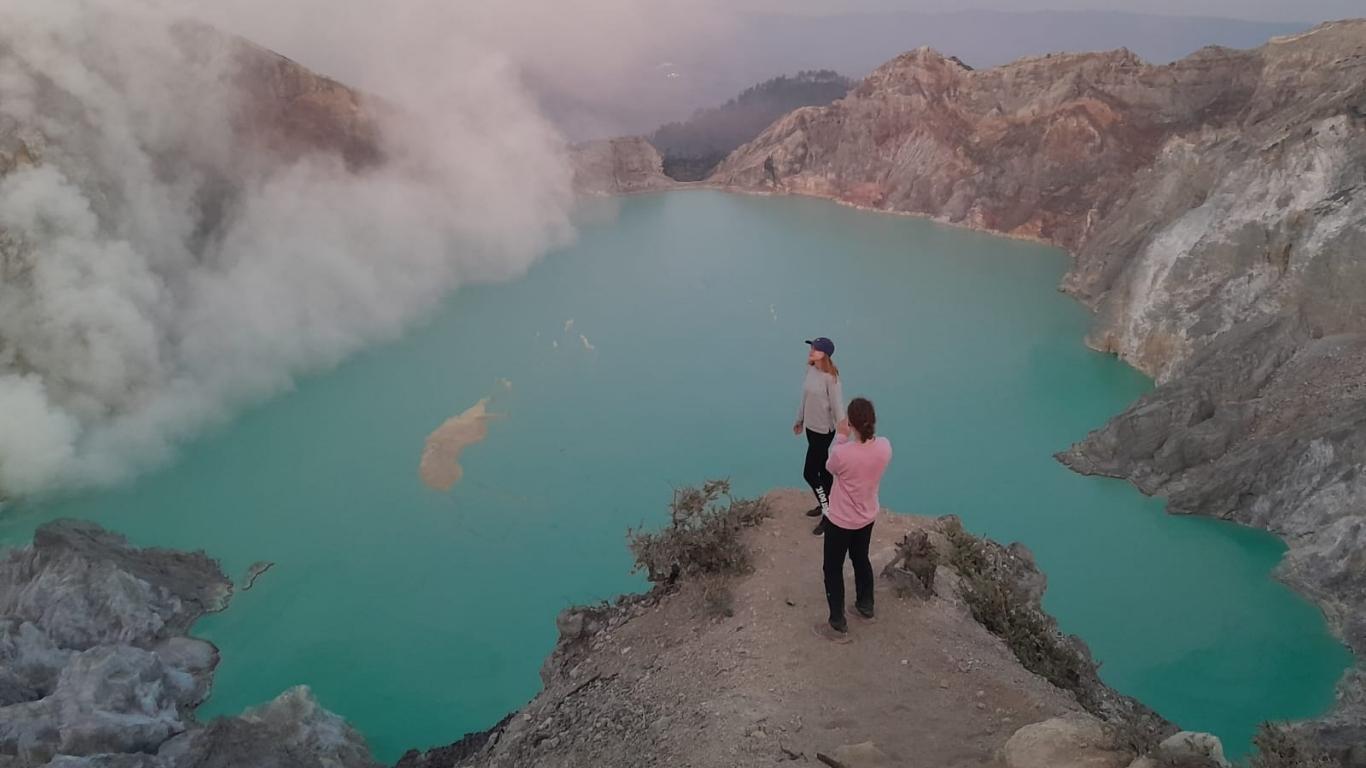
Kawah Ijen runs on its own clock. To see the blue flames inside the crater, you need to start the trek around 1:00 AM, which means departing your hotel near Banyuwangi or Bondowoso before midnight. The hike itself takes about 90 minutes up and an hour down, with the blue flame window lasting until roughly 4:30 AM before sunrise washes it out.
First-timers need to protect their energy for this one. Eat a proper meal before midnight, carry snacks and water, and wear headlamp-ready gear with solid ankle support. After descending, the rest of the morning is recovery time nap, eat, recharge. You've earned it.
The ferry from Ketapang Port to Gilimanuk runs around the clock and takes about 45 minutes. From Gilimanuk, your onward route depends on where you're headed in Bali. North Bali destinations like Lovina are 2 to 3 hours east along the coast. Ubud sits about 3.5 hours south through the mountains. South Bali hubs like Kuta, Seminyak, or Canggu require 4 or more hours of driving.
Decide your Bali drop-off point before the trip, not on the ferry. If you have another week of travel planned in southern Bali, push through. If you're short on energy, a night in Pemuteran or Lovina on the north coast gives you a calmer landing before heading south the next day.
Small oversights add up fast on an overland trip like this. These practical details save time, money, and frustration.
You'll move between 35°C coastal heat and sub-10°C mountain cold within the same 48-hour window. Pack thermal layers and a windproof jacket for Bromo and Ijen, but keep the rest of your bag light and tropical. Trekking shoes with ankle support are non-negotiable for the Ijen crater trail sandals or sneakers won't cut it on loose volcanic rock in the dark.
Don't forget a power bank (outlets in budget hotels and jeeps are unreliable), a photocopy of your passport stored separately from the original, and a basic toiletry kit. Pharmacies along the route are sparse once you leave Yogyakarta.
Two of the five days involve pre-dawn departures, and one includes a midnight trek. Underestimating the fatigue this creates is one of the most common first-timer errors. Build rest windows into the schedule a two-hour nap after Bromo, a proper sit-down meal before the Ijen midnight start.
Avoid filling free time with extra activities. If you have a gap between transfers, use it to sleep or eat rather than squeezing in another temple visit. You'll appreciate the reserve energy when you're hiking a volcanic crater at 2 AM.
Switching between random ojeks, local buses, and last-minute taxi negotiations at every stage creates confusion and wasted time. A single consistent transport arrangement whether that's a hired private driver for the full route or a guided tour through Jotuu simplifies navigation and removes the daily stress of finding your next ride.
Private transport is worth the cost between Yogyakarta and Bromo, and again between Bromo and Ijen. Public options on these legs are infrequent, slow, and hard to time around sunrise schedules.
The overland Java segment is often more expensive than travelers expect. Private drivers, volcano entrance fees, jeep rentals at Bromo, and overnight hotels in remote highland areas add up. Separate your must-pay costs (transport, accommodation, entrance tickets) from optional extras (guided treks, photography tours, extra meals) so you know your baseline spend.
Keep a buffer of $30 50 USD beyond your planned budget for tips, unexpected food stops, and last-minute transport adjustments. For a detailed cost breakdown, Jotuu's budget guide covers each leg of the route with current price ranges.
If you've read this far and the logistics feel like a lot to coordinate alone, that's an honest reaction. This route crosses multiple regions, requires pre-dawn timing at two separate volcanoes, and ends with a sea crossing into a different island. A structured tour package removes the coordination burden while keeping the full experience intact.
Jotuu's Yogyakarta to Bali 5-day tour handles transport, accommodation, and scheduling across every leg of the route, with local guides who know the timing, the roads, and the backup plans when weather or conditions change. It's built specifically for first-timers who want the overland experience without the logistical risk.
Ready to lock in your route? Explore the full 5-day itinerary, check the budget breakdown, or go straight to booking the tour. Jotuu is your simplest path from Yogyakarta to Bali—no guesswork, no missed connections, no regrets.


